Hi,
CLICK TO STARTShadi Dandashi
SCROLL TO CONTINUEI'm a recent Florida Atlantic University graduate in Medical Biology, continuing on the premedical path. My interest in science and engineering started much earlier. Growing up, I was always taking things apart, building something, or trying to understand how the pieces worked together. I remember opening up an RC car as a kid instead of simply playing with it because I wanted to see what the motor, gears, electronics, and mechanical parts were actually doing. I wasn't driven by anything other than curiosity. I was fascinated by systems — by how individual parts could interact and produce something functional as a whole.
As I got older, that curiosity found direction through science. During high school, medicine drew me in through the complexity of anatomy, physiology, and biomechanics, and through that I decided I was going to pursue medicine and work toward becoming a physician. College exposed me to much more complex biology, chemistry, physics, and related sciences. What stood out to me wasn't simply the difficulty of the material, but how deeply interconnected everything was. The more I learned, the harder it became to draw clean boundaries between one subject and another. I kept coming back to the thought that, in some sense, everything was connected to everything else — and I wanted to understand those connections more deeply. Over time, I stopped seeing biology, chemistry, physics, and engineering as separate interests. They became different ways of looking at the same underlying systems.
College changed something else for me too: how I thought about what it meant to actually pursue an idea. For a long time, I assumed that if I wanted to build something meaningful, I first needed the right degree, more resources, or years of technical experience. Eventually, I realized that waiting to know everything meant never starting. So I began approaching problems differently: understand what the problem requires, learn enough to take the next step, build what I can, test it, find where my understanding breaks down, and repeat. New tools, including AI-assisted development, have expanded how far I can take that process while I continue developing deeper skills in areas that naturally draw my curiosity.
From there, I stopped feeling that my curiosity had to stay within any one discipline. Whether I was thinking about medicine, computer science, electronics, biomechanics, mechanical systems, disease pathology, or something entirely different, I could follow the problem wherever it led. What interests me is the opportunity to turn understanding into something tangible: an experiment, a tool, a system, or a better solution to a real problem. There is still an enormous amount I want to learn and many areas I have barely begun to explore. I don't expect that part to end. I just don't want learning to be the end of the process for me. I want what I learn to become something I can test, build on, and eventually use to make a meaningful difference in people's lives.
One of the first places this way of thinking took me was artificial intelligence. In college, I took an undergraduate course on AI in biology. Our class project was simple in concept: use AI to build something that could be applied to biology. I chose to build a disease-classification model using an existing dataset and a hybrid of machine-learning approaches. I enjoyed getting the system to work, and the model eventually reached about 88% accuracy. But the part that stayed with me wasn't the final result. It was the process required to get there: a large prepared dataset, hours of training, repeated experimentation, and then a separation between the period when it learned and the period when it was actually used. That raised a question I couldn't stop returning to: why was learning so often separated from operation in the first place? At first, I assumed the answer was simply a better combination of existing methods. Eventually, I stopped asking how to improve the same training process — and started asking whether the computational foundation itself could be different.
A different starting point for learning.
LCNA builds upward from individually stateful computational elements that interact and learn locally. Learning happens during runtime: controlled experience can modify persistent local state while the system is operating, and later computation can directly use those changes. The audited learning path uses no global or local backpropagation and no optimizer-driven retraining pass.
The current experiments are explicitly supervised: controlled cue, teaching, and contextual signals provide the conditions under which local learning occurs. The system is deliberately small — open-ended continual learning and richer forms of learning remain future research questions.
Understanding LCNA, stage by stage.
LCNA has been developed incrementally, with each stage required to establish a working foundation before adding more complexity. Each stage also revealed something about how the architecture actually learns — together they are the clearest picture of what the model is.
Individually stateful computational elements, event-driven signaling, local interaction, and local learning were assembled into a working experimental substrate.
During active execution, a controlled learning experience produced a persistent local state change. That change remained beyond the learning episode and was available to later computation without a separate retraining cycle.
The later response was causally dependent on retained learned state. Resetting that state removed the learned response; restoring it restored the response.
Persistent learning depended on when the relevant signals occurred: a persistent modification was observed in the tested 250 ms condition, while the 1,500 ms and 6,000 ms conditions produced no comparable persistent modification. This supports temporal gating at write time.
Some previously untrained inputs later accessed the learned pathway under tested conditions, while a prospectively route-disjoint control remained neutral. This supports representation-mediated retrieval under the tested conditions.
A frozen-runtime verification traced the current sealed execution path and tested the learning mechanism directly. No backpropagation, autograd, optimizer-driven training, conventional trainable neural-network layers, fitted decoder, or hidden trained-model pathway was found on the audited project path — and the learned state was traced into later computation. Verified with declared limitations.
That is where LCNA stands today. The next milestones focus on what happens as the architecture grows beyond this initial experimental foundation.
What is established — and what is not yet claimed.
- Online persistent learning during active execution
- Causal dependence on retained learned state
- Timing-dependent learning at write time
- Representation-mediated retrieval under tested conditions
- Audited learning path without backpropagation or optimizer-driven training
- Unsupervised or lifelong continual learning
- Semantic understanding
- Temporal-order or episodic recall
- General reasoning or planning
- Higher-order learning
- Superior compute or energy efficiency
- FPGA acceleration
- Literature-wide architectural novelty
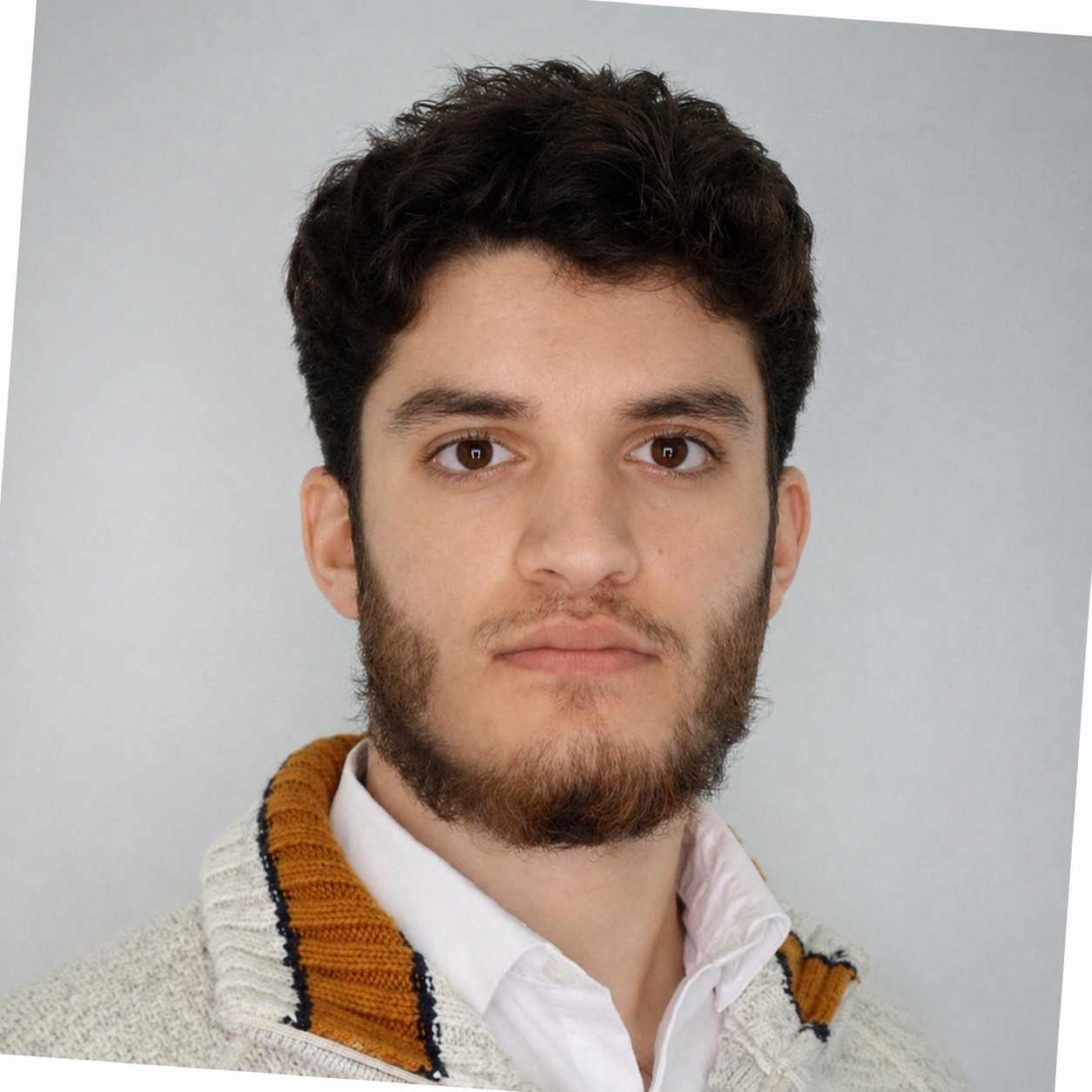
Shadi Dandashi
I'm Shadi Dandashi, a recent Florida Atlantic University graduate in Medical Biology and an independent researcher working across biology, computation, and engineering.
LCNA is my current investigation into whether learning can remain part of a system's ongoing computation rather than being confined to a separate training stage. In controlled, explicitly supervised experiments, the current prototype has demonstrated online persistent learning: experience can modify retained local state during execution, and later computation can use that change without a separate backpropagation or optimizer-driven retraining pass.
The system is still small. My current work is focused on resolving its experimental boundaries, scaling the substrate, and eventually testing richer forms of learning and interacting specialized systems.
Read the current research evidence.
Bounded results, causal controls, limitations, and the questions being investigated next.